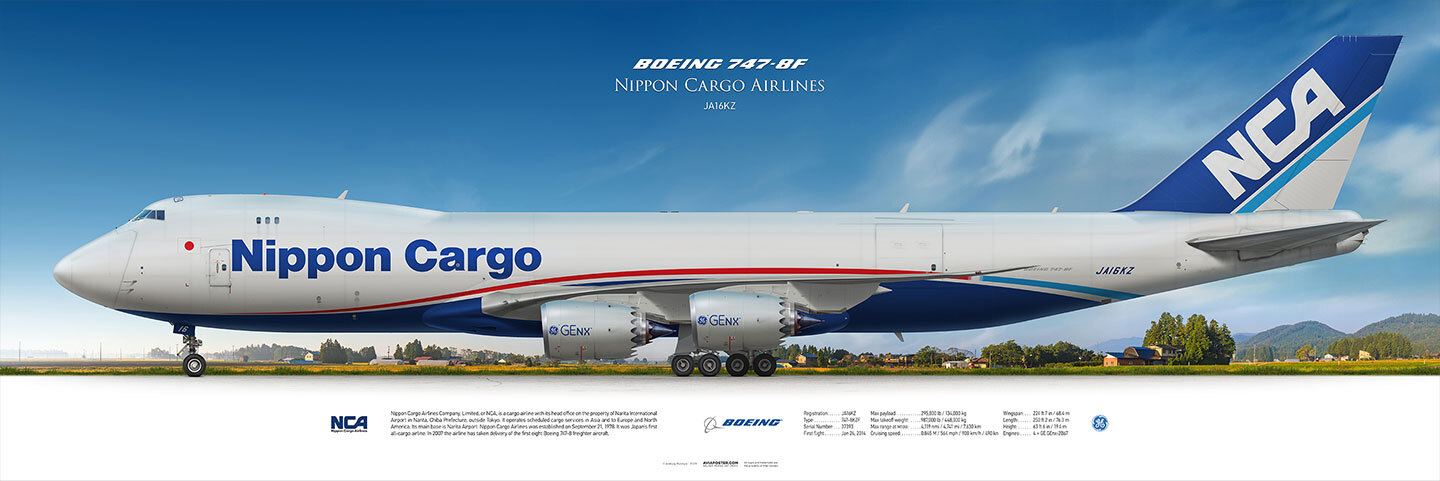
Within the complex architecture of global logistics, cargo airlines remain in the shadow of their passenger counterparts, rarely making headlines and attracting little attention from the general public. Yet they form the invisible arteries of the world economy, connecting continents through which goods flow day and night. Nippon Cargo Airlines (NCA) occupies a special place in this system—not only as Japan's largest specialized cargo carrier, but also as a pioneer that paved the way for the development of the entire international air cargo industry in the Land of the Rising Sun.
Established on September 27, 1978, NCA became Japan's first airline fully specialized in cargo operations. Over nearly five decades of its existence, the company has evolved from a modest startup with a one-room office to a key player in the Asia-Pacific region, operating a fleet of eight modern Boeing 747-8Fs and connecting three continents. The story of NCA is one of how technical expertise, strategic planning, and perseverance can create a company capable of surviving in conditions of fierce competition and economic upheaval.
Birth of the First Cargo Carrier: Background and Foundation
The idea of creating a specialized cargo airline in Japan originated not in aviation circles, but among shipping companies. In the mid-1970s, Japan's largest maritime carriers, primarily Nippon Yusen Kaisha (NYK Line)—part of the Mitsubishi industrial group—began seriously considering diversifying their business. Container shipping had already revolutionized maritime logistics, but it was becoming clear that the future of global trade would require speed that ocean vessels could not provide. Cargo aviation seemed a logical step forward.
In parallel, All Nippon Airways (ANA), a rapidly growing airline that was already challenging Japan Airlines' dominance in Japanese skies, also showed interest in cargo operations. For ANA, creating a cargo division was a way to expand its market presence and explore a new niche where competition with the state flagship JAL might be less fierce.
The compromise was the creation of a joint venture: on September 27, 1978, Nippon Cargo Airlines was officially registered, with shipping company Nippon Yusen and air carrier All Nippon Airways as its founders. Symbolically, the newborn company's first office consisted of just one room, rented in the Kasumigaseki building in Tokyo's Chiyoda ward—the very building where ANA's headquarters was located. The modest beginning reflected the scale of the challenge facing the founders: they had to create an airline from scratch in a country where international cargo operations had previously been a monopoly of Japan Airlines.
The path from registration to the first commercial flight proved long and difficult. Nearly seven years of bureaucratic procedures, licensing, and approvals from Japan's Ministry of Transport were required before NCA finally operated its first commercial flight on May 8, 1985. The start of operations coincided with a period of rapid growth in the Japanese economy, when the country was transforming into a global industrial powerhouse and exports of electronics, automotive components, and high-tech products were increasing sharply. The timing for launching a new cargo carrier could not have been better.
The company's initial fleet consisted of just two Boeing 747-200F freighters, operating six flights per week. These were the true workhorses of aviation—heavy wide-body cargo haulers capable of carrying up to 100 tons of freight on intercontinental distances. From these two aircraft began the story that would, forty years later, lead the company to become a key player in the Asian air cargo market.
Fleet Evolution: From Classic Jumbos to the 747-8F
The history of NCA's aviation fleet precisely reflects the evolution of cargo aviation over the past four decades. The company deliberately committed to a single aircraft type—the Boeing 747—which allowed it to maximize efficiency in crew training, maintenance, and spare parts logistics.
During the first decade, NCA operated the Boeing 747-200F—the cargo version of the legendary "Jumbo Jet" that revolutionized passenger air travel in the 1970s. These aircraft, with their characteristic hump behind the cockpit and swing-nose design forming a massive cargo door, allowed for loading of standard aviation containers and pallets, significantly speeding up ground operations. As the business grew, the fleet expanded, but the basic philosophy remained unchanged: reliability, capacity, and range.
A major step forward came in 2005, when NCA took delivery of its first Boeing 747-400F in Everett, Washington—the first of four aircraft of this type on order. This modification represented a qualitative leap over its predecessors: more efficient engines, improved avionics, and increased range, providing a particularly important capability for a cargo carrier—the ability to carry greater loads over longer distances without refueling. In June 2006, the company ordered two more 747-400Fs in addition to the eight already on order, confirming its expansion ambitions.
By May 2009, all ten ordered 747-400Fs had been delivered, though the last two aircraft became part of a particular story. These two aircraft were transferred to Belgian carrier Cargo B Airlines, in which NCA held a stake. But in May 2009, Cargo B went bankrupt, and the aircraft were placed in storage before being transferred to Russia's AirBridgeCargo. This episode served as yet another reminder of the risks of the aviation business even for stable operators.
Established on September 27, 1978, NCA became Japan's first airline fully specialized in cargo operations. Over nearly five decades of its existence, the company has evolved from a modest startup with a one-room office to a key player in the Asia-Pacific region, operating a fleet of eight modern Boeing 747-8Fs and connecting three continents. The story of NCA is one of how technical expertise, strategic planning, and perseverance can create a company capable of surviving in conditions of fierce competition and economic upheaval.
Birth of the First Cargo Carrier: Background and Foundation
The idea of creating a specialized cargo airline in Japan originated not in aviation circles, but among shipping companies. In the mid-1970s, Japan's largest maritime carriers, primarily Nippon Yusen Kaisha (NYK Line)—part of the Mitsubishi industrial group—began seriously considering diversifying their business. Container shipping had already revolutionized maritime logistics, but it was becoming clear that the future of global trade would require speed that ocean vessels could not provide. Cargo aviation seemed a logical step forward.
In parallel, All Nippon Airways (ANA), a rapidly growing airline that was already challenging Japan Airlines' dominance in Japanese skies, also showed interest in cargo operations. For ANA, creating a cargo division was a way to expand its market presence and explore a new niche where competition with the state flagship JAL might be less fierce.
The compromise was the creation of a joint venture: on September 27, 1978, Nippon Cargo Airlines was officially registered, with shipping company Nippon Yusen and air carrier All Nippon Airways as its founders. Symbolically, the newborn company's first office consisted of just one room, rented in the Kasumigaseki building in Tokyo's Chiyoda ward—the very building where ANA's headquarters was located. The modest beginning reflected the scale of the challenge facing the founders: they had to create an airline from scratch in a country where international cargo operations had previously been a monopoly of Japan Airlines.
The path from registration to the first commercial flight proved long and difficult. Nearly seven years of bureaucratic procedures, licensing, and approvals from Japan's Ministry of Transport were required before NCA finally operated its first commercial flight on May 8, 1985. The start of operations coincided with a period of rapid growth in the Japanese economy, when the country was transforming into a global industrial powerhouse and exports of electronics, automotive components, and high-tech products were increasing sharply. The timing for launching a new cargo carrier could not have been better.
The company's initial fleet consisted of just two Boeing 747-200F freighters, operating six flights per week. These were the true workhorses of aviation—heavy wide-body cargo haulers capable of carrying up to 100 tons of freight on intercontinental distances. From these two aircraft began the story that would, forty years later, lead the company to become a key player in the Asian air cargo market.
Fleet Evolution: From Classic Jumbos to the 747-8F
The history of NCA's aviation fleet precisely reflects the evolution of cargo aviation over the past four decades. The company deliberately committed to a single aircraft type—the Boeing 747—which allowed it to maximize efficiency in crew training, maintenance, and spare parts logistics.
During the first decade, NCA operated the Boeing 747-200F—the cargo version of the legendary "Jumbo Jet" that revolutionized passenger air travel in the 1970s. These aircraft, with their characteristic hump behind the cockpit and swing-nose design forming a massive cargo door, allowed for loading of standard aviation containers and pallets, significantly speeding up ground operations. As the business grew, the fleet expanded, but the basic philosophy remained unchanged: reliability, capacity, and range.
A major step forward came in 2005, when NCA took delivery of its first Boeing 747-400F in Everett, Washington—the first of four aircraft of this type on order. This modification represented a qualitative leap over its predecessors: more efficient engines, improved avionics, and increased range, providing a particularly important capability for a cargo carrier—the ability to carry greater loads over longer distances without refueling. In June 2006, the company ordered two more 747-400Fs in addition to the eight already on order, confirming its expansion ambitions.
By May 2009, all ten ordered 747-400Fs had been delivered, though the last two aircraft became part of a particular story. These two aircraft were transferred to Belgian carrier Cargo B Airlines, in which NCA held a stake. But in May 2009, Cargo B went bankrupt, and the aircraft were placed in storage before being transferred to Russia's AirBridgeCargo. This episode served as yet another reminder of the risks of the aviation business even for stable operators.
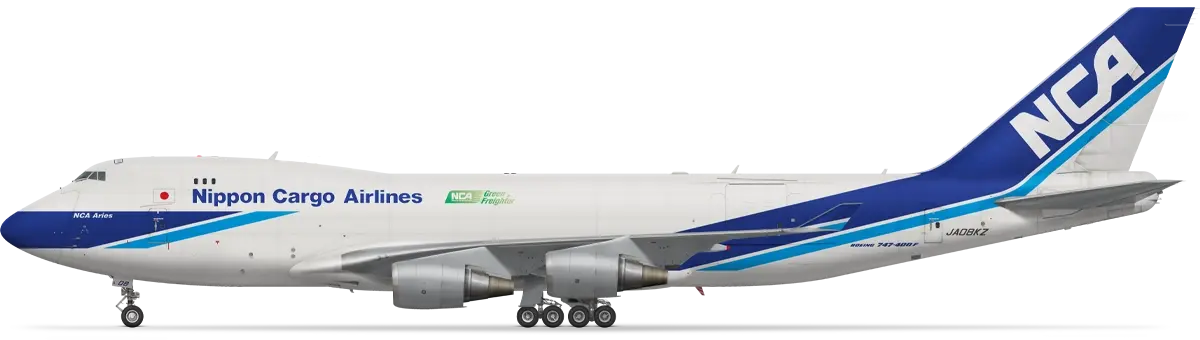
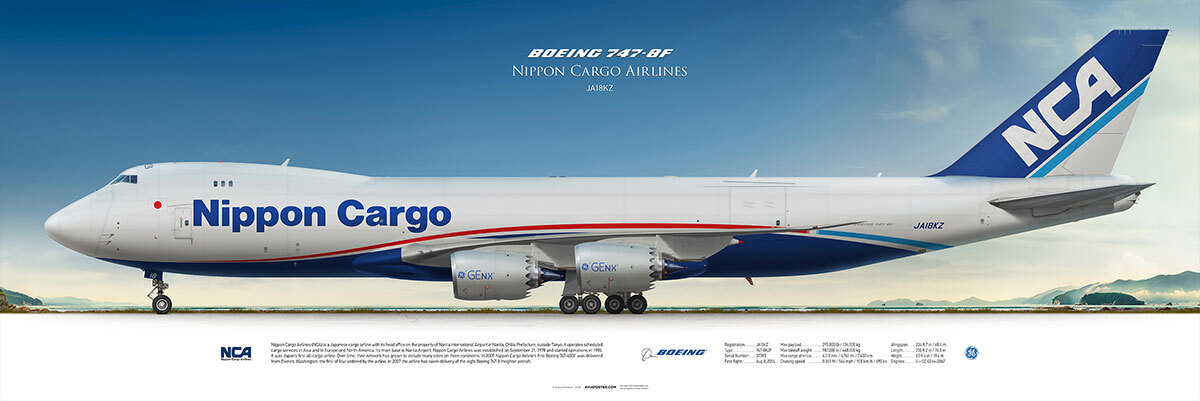
However, the true milestone in NCA's fleet history was the order for the Boeing 747-8F—the latest and most advanced version of the legendary Jumbo. In 2007, the company ordered 14 aircraft of the new type, becoming one of Boeing's largest customers for this program. The 747-8F was the embodiment of everything aviation engineering could offer for cargo operations: 16% greater payload capacity compared to the 747-400F, significantly quieter and more fuel-efficient GEnx-2B engines, a modern glass cockpit, and 400 nautical miles of additional range. Interestingly, two of NCA's aircraft participated in the 747-8F certification testing program.
The first 747-8F for NCA was delivered on July 25, 2012, receiving registration number JA13KZ, and by 2015 the company had received eight of the fourteen ordered 747-8Fs. Then, following a downturn in cargo volumes in the Asia-Pacific region, the company canceled orders for four aircraft while retaining options on the remaining two. This pragmatic decision demonstrated NCA's ability to adapt to changing market conditions.
Today, Nippon Cargo Airlines' fleet consists of eight Boeing 747-8Fs with an average age of about ten years—a relatively young fleet by cargo aviation standards. The aircraft carry registration numbers from JA11KZ to JA18KZ and are painted in the company's signature blue-and-white livery with the distinctive NCA logo on the tail.
Beyond its operational fleet, NCA also employs wet leasing through its partnership with Atlas Air. Five Boeing 747-400Fs owned by NCA are operated by Atlas Air under an extended agreement between the two companies. This business model allows NCA to manage capacity flexibly without increasing fixed costs for crews and maintenance of additional aircraft types.
Flight Geography: Connecting Three Continents
Based at Narita International Airport—Tokyo's main air gateway—Nippon Cargo Airlines has built a route network that reflects the geopolitics and economic geography of 21st-century global trade. The company operates regular cargo flights to Asia, Europe, and North America, creating a triangle of routes through which hundreds of thousands of tons of freight move annually.
Narita serves not merely as NCA's base, but as its operational heart. Here are located the main maintenance hangar, the global operations center, and the crew training center. In October 2007, the company opened its Global Operations Center in Terminal 2 of Narita Airport, from which the entire fleet's operations are coordinated. The choice of Narita was predetermined—this airport was originally designed as an international hub and possesses excellent infrastructure for cargo operations, including specialized warehouses, cold storage facilities, and customs zones.
The North American route remains traditionally the most important for NCA. The company operates flights to Chicago, New York, Dallas/Fort Worth, and Los Angeles—cities chosen deliberately. Chicago, with its central location, serves as a distribution hub for the entire American Midwest; New York provides access to America's financial heart and the densely populated East Coast; Dallas/Fort Worth connects to the rapidly growing South, while Los Angeles links to the West Coast and serves as a gateway for further distribution throughout California. These routes primarily serve exports of Japanese electronics, automotive components, and industrial equipment, and imports of American high-tech goods and agricultural products.
NCA's European network is concentrated on three key hubs: Amsterdam, Milan, and Frankfurt. Amsterdam, with its Schiphol Airport, is one of Europe's most important logistics nodes, from which cargo can be quickly delivered to any point on the continent by ground transport or regional carriers. Milan serves northern Italy's industrial heartland, while Frankfurt is Germany's economic center and all of Europe's most important cargo hub. NCA operates four flights per week on the Narita–Amsterdam–Milan–Narita route, and also covers routes between Tokyo and Frankfurt via Amsterdam.
The Asian route presents particular complexity for NCA due to the geographical proximity of markets and fierce competition. The company serves airports in Shanghai, Hong Kong, Taipei, Singapore, and Bangkok. These cities form the backbone of East Asian production chains, through which components, semi-finished goods, and finished products move. Shanghai—China's largest metropolis and industrial center—serves as the main gateway to continental China. Hong Kong, despite its special status, remains a crucial transshipment point between China and the rest of the world. Singapore and Bangkok provide connections to Southeast Asia—one of the planet's most dynamically developing regions.
In 2019, NCA launched a new weekly flight from Shanghai to Chicago with plans to increase frequency in the future. This aligns with the company's strategy of creating direct bridges between major manufacturing and consumer markets, bypassing the traditional hub model through Tokyo.
A distinctive feature of NCA's route network is its flexibility. The company actively uses technical stops, combined routes, and seasonal schedule changes to optimize aircraft loading. Anchorage, Alaska, for example, often serves as a technical stop on transpacific flights, allowing maximization of payload capacity on long-haul routes. Some flights follow the Narita–Anchorage–Chicago–Anchorage–Narita route, returning the aircraft to base after serving the American route.
In addition to scheduled flights, NCA offers charter services, allowing clients to organize special flights for urgent or particularly large cargo. This part of the business is especially in demand during peak seasons or when emergencies arise requiring immediate delivery of humanitarian cargo, medical equipment, or critically important industrial components.
Operational Specifics: Special Cargo Logistics
Cargo aviation is a world where every kilogram matters, every hour counts, and a mistake in cargo handling can cost millions. Over nearly forty years of operations, Nippon Cargo Airlines has developed specializations that allow it to compete successfully not only with other cargo carriers, but also with the growing belly cargo segment—freight carried in the cargo holds of passenger aircraft.
The foundation of NCA's business consists of general cargo transportation—standardized packages of industrial products, electronics, spare parts, and consumer goods. These are cargoes that do not require special storage conditions but benefit from the speed of air delivery. Japanese exports of semiconductors, automotive components, medical equipment, and industrial electronics have traditionally formed the backbone of NCA's eastbound cargo flow, while return flights carry pharmaceuticals, fashion apparel, aerospace spare parts, and perishable goods from Europe and America.
A special place in NCA's portfolio is occupied by special cargo categories requiring heightened attention and expertise. Dangerous goods—chemicals, batteries, flammable materials, radioactive isotopes for medical purposes—require not only strict compliance with IATA international regulations, but also specialized personnel training. NCA accepts only repackaged metal containers with dangerous goods, requiring additional protective packaging to prevent leaks that could threaten flight safety. This policy, stricter than IATA's minimum requirements, reflects the priority the company places on safety.
Perishable cargo represents a separate technological challenge. Fresh seafood from Japanese ports, premium fruits from southern prefectures, greenhouse flowers—all these goods require not only rapid delivery but also temperature maintenance throughout the entire logistics chain. NCA has developed a specialized product, NCA Thermo+, for transporting temperature-sensitive cargo, including pharmaceuticals and perishable products. In conditions where a difference of several degrees can mean the difference between delivering a high-quality product and spoiled cargo, temperature control becomes a critically important competitive advantage.
The growth of e-commerce over the past decade has added a new dimension to the cargo carrier business. Consumers in New York want to receive goods ordered from Tokyo in two to three days, not after two weeks of ocean shipping. NCA has adapted its services to e-commerce needs, offering cargo tracking system integration, flexible consolidation schemes for small shipments, and express delivery. Although the company's core business remains focused on large industrial cargo, the growing e-commerce segment provides additional revenue diversification.
An important part of NCA's operational philosophy is a system of global partnerships and codeshare agreements. The company collaborates with regional cargo carriers, ground logistics operators, and freight forwarders, creating integrated door-to-door logistics chains. This network model allows NCA to offer clients comprehensive solutions that go beyond simple air transportation between two airports.
Ownership Transformation: From NYK to ANA
The history of Nippon Cargo Airlines' corporate structure is about how the strategic priorities of major Japanese corporations change. Originally, NCA was a joint venture between shipping company Nippon Yusen and air carrier All Nippon Airways. This combination seemed logical: NYK brought expertise in logistics and global freight operations, while ANA provided knowledge of the aviation industry and access to infrastructure.
However, after twenty-seven years of partnership, it became clear that the interests of the two founders were diverging. In August 2005, ANA sold its stake in the company to Nippon Yusen, and NCA became a wholly-owned subsidiary of the shipping giant. For ANA, this decision was part of a strategy to develop its own cargo division, which by that time was actively expanding, utilizing the cargo holds of passenger aircraft and its own Boeing 767F freighters. NYK, for its part, viewed NCA as a natural extension of its global logistics business into air transport.
Under Nippon Yusen's management, the company operated for more than a decade and a half, but by the early 2020s it became clear that the operational costs of a specialized cargo carrier were becoming increasingly burdensome for the shipping company. NYK announced its decision to sell NCA, citing financial challenges in maintaining the fleet amid shrinking operating margins. Maintaining a modern fleet of wide-body cargo aircraft, training specialized crews, and servicing a global network—all this required investments and expertise that were far from Nippon Yusen's core business.
In March 2023, NYK and ANA Holdings signed an agreement for ANA to acquire 100% of Nippon Cargo Airlines' shares, coming full circle and returning the company under the wing of an aviation holding. For ANA, this acquisition was a strategic move allowing it to sharply strengthen its position in the cargo market. The combination of its own Boeing 767F and 777F freighters with NCA's eight 747-8Fs was intended to create a powerful and diversified cargo fleet.
However, the path to completing the deal proved significantly longer than expected. Initially, the acquisition was planned to close on October 1, 2023, but regulatory reviews in Japan, China, and Singapore took much longer. The deal was postponed four times—first to February 2024, then to April, July, and finally to March 2025. Antitrust authorities carefully examined the merger's impact on competition, especially on key routes between Japan and the United States. Japan initially rejected the deal due to concerns that it would limit competition on routes from Japan to the Chicago and Los Angeles areas.
To address regulatory concerns, the companies agreed to provide a block space agreement to competitor Polar Air Cargo and to appoint a lawyer and economist to monitor the agreement. These measures were intended to ensure that the merger would not lead to market monopolization and would preserve competitive options for shippers.
On August 1, 2025, ANA Holdings finally completed the acquisition of all Nippon Cargo Airlines shares through a simplified share exchange with Nippon Yusen. The integration made ANA Group Japan's largest combined passenger and cargo carrier and the world's 14th largest aviation holding by cargo tonnage. NYK received in exchange 3.9 million ANA Holdings shares, retaining an economic interest in NCA's success while shedding the operational burden of managing an airline.
The first 747-8F for NCA was delivered on July 25, 2012, receiving registration number JA13KZ, and by 2015 the company had received eight of the fourteen ordered 747-8Fs. Then, following a downturn in cargo volumes in the Asia-Pacific region, the company canceled orders for four aircraft while retaining options on the remaining two. This pragmatic decision demonstrated NCA's ability to adapt to changing market conditions.
Today, Nippon Cargo Airlines' fleet consists of eight Boeing 747-8Fs with an average age of about ten years—a relatively young fleet by cargo aviation standards. The aircraft carry registration numbers from JA11KZ to JA18KZ and are painted in the company's signature blue-and-white livery with the distinctive NCA logo on the tail.
Beyond its operational fleet, NCA also employs wet leasing through its partnership with Atlas Air. Five Boeing 747-400Fs owned by NCA are operated by Atlas Air under an extended agreement between the two companies. This business model allows NCA to manage capacity flexibly without increasing fixed costs for crews and maintenance of additional aircraft types.
Flight Geography: Connecting Three Continents
Based at Narita International Airport—Tokyo's main air gateway—Nippon Cargo Airlines has built a route network that reflects the geopolitics and economic geography of 21st-century global trade. The company operates regular cargo flights to Asia, Europe, and North America, creating a triangle of routes through which hundreds of thousands of tons of freight move annually.
Narita serves not merely as NCA's base, but as its operational heart. Here are located the main maintenance hangar, the global operations center, and the crew training center. In October 2007, the company opened its Global Operations Center in Terminal 2 of Narita Airport, from which the entire fleet's operations are coordinated. The choice of Narita was predetermined—this airport was originally designed as an international hub and possesses excellent infrastructure for cargo operations, including specialized warehouses, cold storage facilities, and customs zones.
The North American route remains traditionally the most important for NCA. The company operates flights to Chicago, New York, Dallas/Fort Worth, and Los Angeles—cities chosen deliberately. Chicago, with its central location, serves as a distribution hub for the entire American Midwest; New York provides access to America's financial heart and the densely populated East Coast; Dallas/Fort Worth connects to the rapidly growing South, while Los Angeles links to the West Coast and serves as a gateway for further distribution throughout California. These routes primarily serve exports of Japanese electronics, automotive components, and industrial equipment, and imports of American high-tech goods and agricultural products.
NCA's European network is concentrated on three key hubs: Amsterdam, Milan, and Frankfurt. Amsterdam, with its Schiphol Airport, is one of Europe's most important logistics nodes, from which cargo can be quickly delivered to any point on the continent by ground transport or regional carriers. Milan serves northern Italy's industrial heartland, while Frankfurt is Germany's economic center and all of Europe's most important cargo hub. NCA operates four flights per week on the Narita–Amsterdam–Milan–Narita route, and also covers routes between Tokyo and Frankfurt via Amsterdam.
The Asian route presents particular complexity for NCA due to the geographical proximity of markets and fierce competition. The company serves airports in Shanghai, Hong Kong, Taipei, Singapore, and Bangkok. These cities form the backbone of East Asian production chains, through which components, semi-finished goods, and finished products move. Shanghai—China's largest metropolis and industrial center—serves as the main gateway to continental China. Hong Kong, despite its special status, remains a crucial transshipment point between China and the rest of the world. Singapore and Bangkok provide connections to Southeast Asia—one of the planet's most dynamically developing regions.
In 2019, NCA launched a new weekly flight from Shanghai to Chicago with plans to increase frequency in the future. This aligns with the company's strategy of creating direct bridges between major manufacturing and consumer markets, bypassing the traditional hub model through Tokyo.
A distinctive feature of NCA's route network is its flexibility. The company actively uses technical stops, combined routes, and seasonal schedule changes to optimize aircraft loading. Anchorage, Alaska, for example, often serves as a technical stop on transpacific flights, allowing maximization of payload capacity on long-haul routes. Some flights follow the Narita–Anchorage–Chicago–Anchorage–Narita route, returning the aircraft to base after serving the American route.
In addition to scheduled flights, NCA offers charter services, allowing clients to organize special flights for urgent or particularly large cargo. This part of the business is especially in demand during peak seasons or when emergencies arise requiring immediate delivery of humanitarian cargo, medical equipment, or critically important industrial components.
Operational Specifics: Special Cargo Logistics
Cargo aviation is a world where every kilogram matters, every hour counts, and a mistake in cargo handling can cost millions. Over nearly forty years of operations, Nippon Cargo Airlines has developed specializations that allow it to compete successfully not only with other cargo carriers, but also with the growing belly cargo segment—freight carried in the cargo holds of passenger aircraft.
The foundation of NCA's business consists of general cargo transportation—standardized packages of industrial products, electronics, spare parts, and consumer goods. These are cargoes that do not require special storage conditions but benefit from the speed of air delivery. Japanese exports of semiconductors, automotive components, medical equipment, and industrial electronics have traditionally formed the backbone of NCA's eastbound cargo flow, while return flights carry pharmaceuticals, fashion apparel, aerospace spare parts, and perishable goods from Europe and America.
A special place in NCA's portfolio is occupied by special cargo categories requiring heightened attention and expertise. Dangerous goods—chemicals, batteries, flammable materials, radioactive isotopes for medical purposes—require not only strict compliance with IATA international regulations, but also specialized personnel training. NCA accepts only repackaged metal containers with dangerous goods, requiring additional protective packaging to prevent leaks that could threaten flight safety. This policy, stricter than IATA's minimum requirements, reflects the priority the company places on safety.
Perishable cargo represents a separate technological challenge. Fresh seafood from Japanese ports, premium fruits from southern prefectures, greenhouse flowers—all these goods require not only rapid delivery but also temperature maintenance throughout the entire logistics chain. NCA has developed a specialized product, NCA Thermo+, for transporting temperature-sensitive cargo, including pharmaceuticals and perishable products. In conditions where a difference of several degrees can mean the difference between delivering a high-quality product and spoiled cargo, temperature control becomes a critically important competitive advantage.
The growth of e-commerce over the past decade has added a new dimension to the cargo carrier business. Consumers in New York want to receive goods ordered from Tokyo in two to three days, not after two weeks of ocean shipping. NCA has adapted its services to e-commerce needs, offering cargo tracking system integration, flexible consolidation schemes for small shipments, and express delivery. Although the company's core business remains focused on large industrial cargo, the growing e-commerce segment provides additional revenue diversification.
An important part of NCA's operational philosophy is a system of global partnerships and codeshare agreements. The company collaborates with regional cargo carriers, ground logistics operators, and freight forwarders, creating integrated door-to-door logistics chains. This network model allows NCA to offer clients comprehensive solutions that go beyond simple air transportation between two airports.
Ownership Transformation: From NYK to ANA
The history of Nippon Cargo Airlines' corporate structure is about how the strategic priorities of major Japanese corporations change. Originally, NCA was a joint venture between shipping company Nippon Yusen and air carrier All Nippon Airways. This combination seemed logical: NYK brought expertise in logistics and global freight operations, while ANA provided knowledge of the aviation industry and access to infrastructure.
However, after twenty-seven years of partnership, it became clear that the interests of the two founders were diverging. In August 2005, ANA sold its stake in the company to Nippon Yusen, and NCA became a wholly-owned subsidiary of the shipping giant. For ANA, this decision was part of a strategy to develop its own cargo division, which by that time was actively expanding, utilizing the cargo holds of passenger aircraft and its own Boeing 767F freighters. NYK, for its part, viewed NCA as a natural extension of its global logistics business into air transport.
Under Nippon Yusen's management, the company operated for more than a decade and a half, but by the early 2020s it became clear that the operational costs of a specialized cargo carrier were becoming increasingly burdensome for the shipping company. NYK announced its decision to sell NCA, citing financial challenges in maintaining the fleet amid shrinking operating margins. Maintaining a modern fleet of wide-body cargo aircraft, training specialized crews, and servicing a global network—all this required investments and expertise that were far from Nippon Yusen's core business.
In March 2023, NYK and ANA Holdings signed an agreement for ANA to acquire 100% of Nippon Cargo Airlines' shares, coming full circle and returning the company under the wing of an aviation holding. For ANA, this acquisition was a strategic move allowing it to sharply strengthen its position in the cargo market. The combination of its own Boeing 767F and 777F freighters with NCA's eight 747-8Fs was intended to create a powerful and diversified cargo fleet.
However, the path to completing the deal proved significantly longer than expected. Initially, the acquisition was planned to close on October 1, 2023, but regulatory reviews in Japan, China, and Singapore took much longer. The deal was postponed four times—first to February 2024, then to April, July, and finally to March 2025. Antitrust authorities carefully examined the merger's impact on competition, especially on key routes between Japan and the United States. Japan initially rejected the deal due to concerns that it would limit competition on routes from Japan to the Chicago and Los Angeles areas.
To address regulatory concerns, the companies agreed to provide a block space agreement to competitor Polar Air Cargo and to appoint a lawyer and economist to monitor the agreement. These measures were intended to ensure that the merger would not lead to market monopolization and would preserve competitive options for shippers.
On August 1, 2025, ANA Holdings finally completed the acquisition of all Nippon Cargo Airlines shares through a simplified share exchange with Nippon Yusen. The integration made ANA Group Japan's largest combined passenger and cargo carrier and the world's 14th largest aviation holding by cargo tonnage. NYK received in exchange 3.9 million ANA Holdings shares, retaining an economic interest in NCA's success while shedding the operational burden of managing an airline.
Current State: A New Era Under ANA's Wing
The fall of 2025 opens a new chapter in Nippon Cargo Airlines' history—its first chapter as part of a major aviation holding. The integration of NCA's large freighter route network with ANA Group's extensive international network of passenger and cargo flights significantly enhances transport capabilities between Japan, Asia, Europe, and the United States. The synergy is obvious: NCA specializes in heavy intercontinental transport using 747-8Fs, while ANA operates more flexible medium freighters—767Fs and 777Fs—and also has a vast network of passenger flights with available cargo capacity in lower holds.
The logic of the merger goes beyond simply increasing the fleet. The strategic integration of NCA's cargo network and specialized expertise with ANA Group's existing infrastructure will significantly improve the ability to serve customer needs, promises Koji Shibata, President and CEO of ANA Holdings. This is about creating a comprehensive cargo transport ecosystem where clients can obtain optimal solutions for any type of cargo—from urgent delivery of small pharmaceutical shipments by regional 767Fs to mass transport of industrial equipment by giant 747-8Fs.
The financial prospects also look promising. ANA Group's profitability is expected to increase with NCA's inclusion, as the strengthened cargo business will enhance its resilience to market volatility and changes. Cargo operations traditionally demonstrate different cyclicality compared to passenger operations—the COVID-19 pandemic vividly demonstrated this when, amid the collapse of passenger transport, demand for cargo aviation soared. Diversification between passenger and cargo segments makes the holding more resistant to industry shocks.
An important factor for future growth is the expected expansion of Narita Airport's capacity with the construction of new runways in the near future, which will significantly increase the number of departures and arrivals. For a cargo airline based at Narita, this means the opportunity to expand the route network, increase flight frequency on existing routes, and improve time slots for nighttime cargo operations, when slots are particularly valuable.
Nevertheless, significant challenges lie ahead. Cargo aviation in the Asia-Pacific region is experiencing a period of intense competition. Chinese cargo carriers such as SF Airlines and Yangtze River Express are aggressively expanding their fleets and networks. Qatari and Emirati carriers are leveraging their geographical advantages to create global cargo hubs. Even traditional European and American operators like Lufthansa Cargo, Cargolux, and Atlas Air maintain strong positions on key routes.
Geopolitical tensions add uncertainty. Trade conflicts between the US and China, sanctions against Russia that have disrupted traditional air corridors through Siberia, fuel price volatility—all these are factors affecting cargo operations profitability. NCA under ANA's management will need to demonstrate not only operational efficiency but also strategic flexibility in adapting to rapidly changing conditions.
Technological transformation is also on the agenda. Digitalization of logistics processes, implementation of real-time cargo tracking systems, blockchain for documentation, artificial intelligence for route and loading optimization—these are technologies that are necessary for competitiveness in modern cargo aviation. ANA brings to this merger experience in implementing digital systems, which should accelerate the modernization of NCA's operations.
The environmental agenda is also becoming increasingly relevant. The Boeing 747-8F, despite its efficiency compared to predecessors, remains a four-engine aircraft in an era when the industry is moving toward more economical twin-engine solutions. ANA has already ordered two Boeing 777-8Fs—the next generation of freighters promising even greater efficiency. The question of when and how NCA will begin renewing its fleet remains open. But this is an inevitable part of the long-term strategy.
Conclusion
The history of Nippon Cargo Airlines is, in miniature, the history of the Japanese economy over the past five decades: from the explosive growth of the 1980s through the stagnation of the 1990s and 2000s to the modern realities of globalization and technological change. The company that began with one room and two aircraft has transformed into a key player in Asian cargo aviation, connecting three continents with modern wide-body freighters.
Joining ANA Group opens new horizons for NCA. The synergy of the two operators can create a cargo system capable of competing with the world's best players, offering Japanese and international clients a full spectrum of logistics solutions—from urgent express deliveries to mass industrial transport. ANA's extensive regional network in Asia complements NCA's intercontinental routes, creating opportunities for complex multimodal logistics chains.
At the same time, the success of integration is not guaranteed. Two organizational cultures will need to find common ground, operational systems must be integrated, and sales strategies must be aligned. The history of the aviation industry is full of examples of failed mergers where expected synergies never materialized. For NCA and ANA, it will be critically important to preserve what made NCA successful—operational discipline, expertise in handling large cargo, reputation as a reliable partner—while leveraging the advantages of belonging to a major holding.
Global logistics continues to evolve. The growth of e-commerce, restructuring of global production chains, climate requirements, digital transformation—these are all trends that will define the future of cargo aviation. Nippon Cargo Airlines, having survived nearly five decades of takeoffs and turbulence, now enters a new phase of its development with the resources and support of one of Asia's largest aviation holdings. Whether it can seize these opportunities and strengthen its position in the third decade of the 21st century will be revealed in the coming years. But one thing is certain: the story of Japan's first cargo carrier continues, and its next chapter promises to be no less interesting than the previous ones.
The fall of 2025 opens a new chapter in Nippon Cargo Airlines' history—its first chapter as part of a major aviation holding. The integration of NCA's large freighter route network with ANA Group's extensive international network of passenger and cargo flights significantly enhances transport capabilities between Japan, Asia, Europe, and the United States. The synergy is obvious: NCA specializes in heavy intercontinental transport using 747-8Fs, while ANA operates more flexible medium freighters—767Fs and 777Fs—and also has a vast network of passenger flights with available cargo capacity in lower holds.
The logic of the merger goes beyond simply increasing the fleet. The strategic integration of NCA's cargo network and specialized expertise with ANA Group's existing infrastructure will significantly improve the ability to serve customer needs, promises Koji Shibata, President and CEO of ANA Holdings. This is about creating a comprehensive cargo transport ecosystem where clients can obtain optimal solutions for any type of cargo—from urgent delivery of small pharmaceutical shipments by regional 767Fs to mass transport of industrial equipment by giant 747-8Fs.
The financial prospects also look promising. ANA Group's profitability is expected to increase with NCA's inclusion, as the strengthened cargo business will enhance its resilience to market volatility and changes. Cargo operations traditionally demonstrate different cyclicality compared to passenger operations—the COVID-19 pandemic vividly demonstrated this when, amid the collapse of passenger transport, demand for cargo aviation soared. Diversification between passenger and cargo segments makes the holding more resistant to industry shocks.
An important factor for future growth is the expected expansion of Narita Airport's capacity with the construction of new runways in the near future, which will significantly increase the number of departures and arrivals. For a cargo airline based at Narita, this means the opportunity to expand the route network, increase flight frequency on existing routes, and improve time slots for nighttime cargo operations, when slots are particularly valuable.
Nevertheless, significant challenges lie ahead. Cargo aviation in the Asia-Pacific region is experiencing a period of intense competition. Chinese cargo carriers such as SF Airlines and Yangtze River Express are aggressively expanding their fleets and networks. Qatari and Emirati carriers are leveraging their geographical advantages to create global cargo hubs. Even traditional European and American operators like Lufthansa Cargo, Cargolux, and Atlas Air maintain strong positions on key routes.
Geopolitical tensions add uncertainty. Trade conflicts between the US and China, sanctions against Russia that have disrupted traditional air corridors through Siberia, fuel price volatility—all these are factors affecting cargo operations profitability. NCA under ANA's management will need to demonstrate not only operational efficiency but also strategic flexibility in adapting to rapidly changing conditions.
Technological transformation is also on the agenda. Digitalization of logistics processes, implementation of real-time cargo tracking systems, blockchain for documentation, artificial intelligence for route and loading optimization—these are technologies that are necessary for competitiveness in modern cargo aviation. ANA brings to this merger experience in implementing digital systems, which should accelerate the modernization of NCA's operations.
The environmental agenda is also becoming increasingly relevant. The Boeing 747-8F, despite its efficiency compared to predecessors, remains a four-engine aircraft in an era when the industry is moving toward more economical twin-engine solutions. ANA has already ordered two Boeing 777-8Fs—the next generation of freighters promising even greater efficiency. The question of when and how NCA will begin renewing its fleet remains open. But this is an inevitable part of the long-term strategy.
Conclusion
The history of Nippon Cargo Airlines is, in miniature, the history of the Japanese economy over the past five decades: from the explosive growth of the 1980s through the stagnation of the 1990s and 2000s to the modern realities of globalization and technological change. The company that began with one room and two aircraft has transformed into a key player in Asian cargo aviation, connecting three continents with modern wide-body freighters.
Joining ANA Group opens new horizons for NCA. The synergy of the two operators can create a cargo system capable of competing with the world's best players, offering Japanese and international clients a full spectrum of logistics solutions—from urgent express deliveries to mass industrial transport. ANA's extensive regional network in Asia complements NCA's intercontinental routes, creating opportunities for complex multimodal logistics chains.
At the same time, the success of integration is not guaranteed. Two organizational cultures will need to find common ground, operational systems must be integrated, and sales strategies must be aligned. The history of the aviation industry is full of examples of failed mergers where expected synergies never materialized. For NCA and ANA, it will be critically important to preserve what made NCA successful—operational discipline, expertise in handling large cargo, reputation as a reliable partner—while leveraging the advantages of belonging to a major holding.
Global logistics continues to evolve. The growth of e-commerce, restructuring of global production chains, climate requirements, digital transformation—these are all trends that will define the future of cargo aviation. Nippon Cargo Airlines, having survived nearly five decades of takeoffs and turbulence, now enters a new phase of its development with the resources and support of one of Asia's largest aviation holdings. Whether it can seize these opportunities and strengthen its position in the third decade of the 21st century will be revealed in the coming years. But one thing is certain: the story of Japan's first cargo carrier continues, and its next chapter promises to be no less interesting than the previous ones.