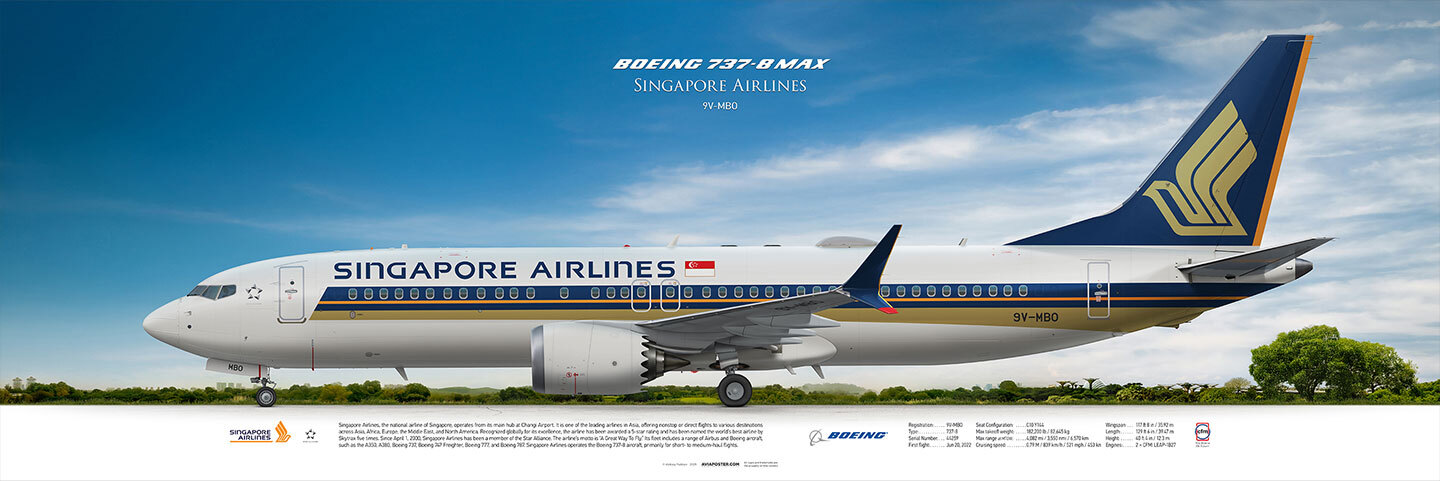
The relationship between Singapore Airlines and the Boeing 737 resembles a three-act drama: a rapid beginning, prolonged oblivion, and an unexpected renaissance. The airline, renowned for its impeccable image as a wide-body operator, has twice possessed narrow-body aircraft—and both times it happened through circumstance rather than choice.
In September 1972, when Malaysia-Singapore Airlines split into two independent carriers, Singapore Airlines inherited five narrow-body Boeing 737-100s. For several years, the new carrier operated a small fleet of this type. However, from the very start, the airline committed to wide-body aircraft and chose a strategy as a premium long-haul carrier. Regional route development was not part of its plans, and by 1980, all 737-100s had been transferred to American carrier Air Florida.
For the subsequent forty years, Singapore Airlines demonstrated a rare adherence to the "wide-bodies only" philosophy. Regional operations were delegated to subsidiary SilkAir with its fleet of 737-800s and A320s. It seemed the path back to narrow-body aircraft had been rejected forever.
But in May 2021, history took an unexpected turn: SilkAir was absorbed by its parent company. Singapore Airlines suddenly inherited a fleet of fifteen 737s once again: nine Boeing 737-800s and six 737-8 MAXs. SilkAir had planned to rapidly replace the older 800s with new MAXs, but the global grounding of the MAX following two crashes disrupted the original plans. Singapore Airlines continued the fleet renewal.
Now, five years later, Singapore Airlines operates 20 Boeing 737-8 MAXs on regional routes. The fleet serves 26 destinations and operates approximately every fourth flight for the airline. In October 2025, the last 737-800 completed its final flight from Kathmandu, concluding the transition period. The new MAXs received comfortable lie-flat seats in business class, WiFi, and entertainment systems—the standard this carrier holds so dear.
The future of the narrow-body fleet is cautiously optimistic. In May 2023, Singapore Airlines reduced its 737 MAX order from 29 to 21 aircraft, the last of which is expected to join its fleet during the current year. In Asia, there is sustained demand for regional operations, and even a premium operator cannot entirely ignore the economics of narrow-body aircraft.
Thus the Boeing 737, once banished from the fleet, has found a home again under the Singapore Airlines flag—and this time, it appears, for the long term.
In September 1972, when Malaysia-Singapore Airlines split into two independent carriers, Singapore Airlines inherited five narrow-body Boeing 737-100s. For several years, the new carrier operated a small fleet of this type. However, from the very start, the airline committed to wide-body aircraft and chose a strategy as a premium long-haul carrier. Regional route development was not part of its plans, and by 1980, all 737-100s had been transferred to American carrier Air Florida.
For the subsequent forty years, Singapore Airlines demonstrated a rare adherence to the "wide-bodies only" philosophy. Regional operations were delegated to subsidiary SilkAir with its fleet of 737-800s and A320s. It seemed the path back to narrow-body aircraft had been rejected forever.
But in May 2021, history took an unexpected turn: SilkAir was absorbed by its parent company. Singapore Airlines suddenly inherited a fleet of fifteen 737s once again: nine Boeing 737-800s and six 737-8 MAXs. SilkAir had planned to rapidly replace the older 800s with new MAXs, but the global grounding of the MAX following two crashes disrupted the original plans. Singapore Airlines continued the fleet renewal.
Now, five years later, Singapore Airlines operates 20 Boeing 737-8 MAXs on regional routes. The fleet serves 26 destinations and operates approximately every fourth flight for the airline. In October 2025, the last 737-800 completed its final flight from Kathmandu, concluding the transition period. The new MAXs received comfortable lie-flat seats in business class, WiFi, and entertainment systems—the standard this carrier holds so dear.
The future of the narrow-body fleet is cautiously optimistic. In May 2023, Singapore Airlines reduced its 737 MAX order from 29 to 21 aircraft, the last of which is expected to join its fleet during the current year. In Asia, there is sustained demand for regional operations, and even a premium operator cannot entirely ignore the economics of narrow-body aircraft.
Thus the Boeing 737, once banished from the fleet, has found a home again under the Singapore Airlines flag—and this time, it appears, for the long term.